Construction Leadership Plays a Key Role in Jobsite Safety
Recent accidents provide key takeaways to how construction companies can ensure a safer workplace that will ultimately contribute to fewer injuries and deaths… and better profits.
Read the first part of this story, "Jobsite Safety Is No Joke".
Remember the story about the Sword of Damocles? It’s an ancient Greek moral anecdote (usually attributed to Roman philosopher Cicero) about how responsibility to their people is every leader’s ultimate duty. They are accountable for everything that happens with their subjects, and they cannot unburden themselves from the perils and power, and even liability, when dangers arise. The same ideas hold true for the modern construction jobsite. Especially when it comes to safety and accident prevention.
Even more so today, company leadership holds responsibility for the entire conduct of an organization. They usually get the credit for all its successes. What about the opposite? Construction managers and executives are more often being held accountable for negligence, and even facing criminal prosecution, when the worst occurs.
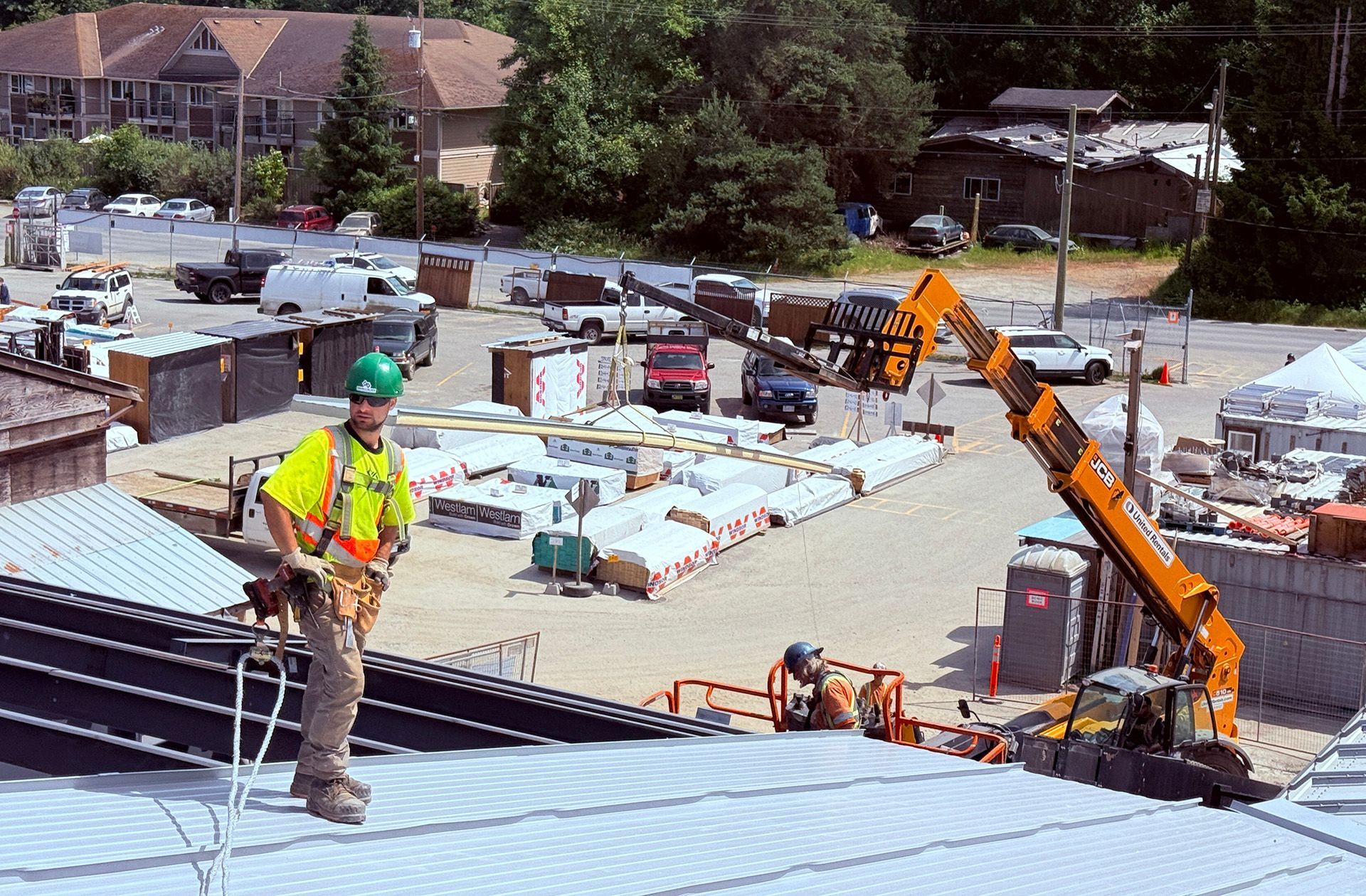
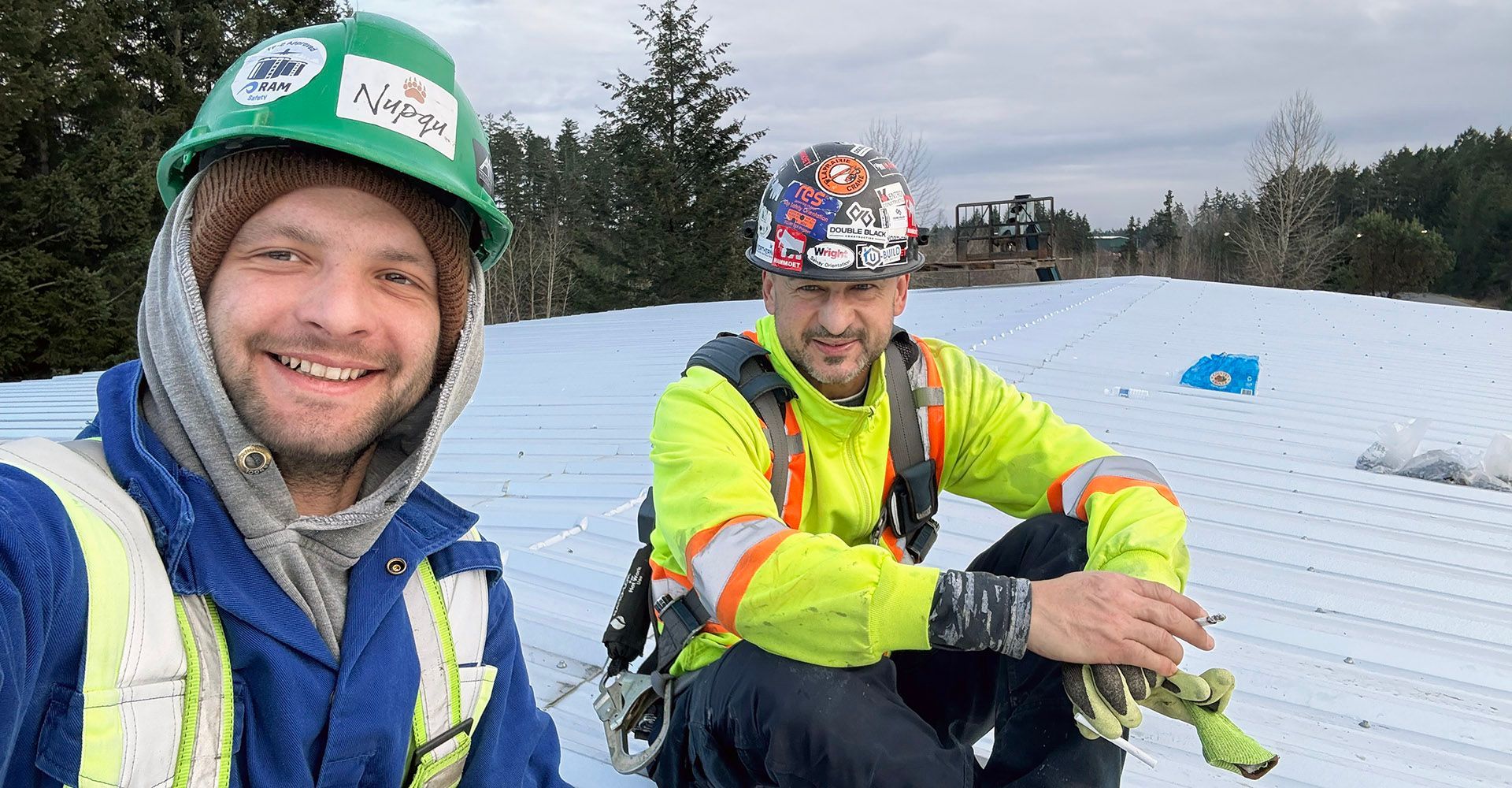
Skilled trade teams are only completely safe when they work in a culture that respects safety procedures, understands them and applies them rigorously every day. And this starts at the top. Teams must be provided with the proper equipment, training and supervision. Team members can only be expected to adhere to safety standards when inspired and mentored properly. The entire organization is responsible for protecting each other; it’s not just up to the individual who is installing roofing panels or doing other project work. It only makes sense.
Safety is a priority at Double Black Construction, so we wanted to write an industry reminder about the consequences when accidents occur. It’s no longer a case of apologies and a fine, the punishments are much more severe.
Leaders Are Always Accountable for Accidents
While corporate entities cannot be imprisoned, at-fault convictions can lead to significant fines and reputational damage; individuals “directing work” (including executives, directors, or project-level managers) can face individual criminal charges, with potential for imprisonment (Canadian Criminal Code, Section 217.1, which imposes duties on those “directing work” to take reasonable steps to prevent harm).
In October 2012, pipelayer Jeffrey Caron was working on a sewer replacement project in Burnaby, British Columbia, when an adjacent retaining wall collapsed, burying him and injuring a coworker. In a rare application of Canada’s criminal negligence laws for workplace deaths, the excavating company, as primary contractor, was found guilty of two counts of criminal negligence causing bodily harm and death by the British Columbia Supreme Court in December 2025.
The presiding judge emphasized that senior management should have foreseen and mitigated the hazards, particularly given ambiguity in engineering documentation and visible signs a collapse was possible.
The court’s decision underscored a corporate failure to implement adequate safety measures (e.g., proactive inspection, hazard recognition and proper worker training), concluding that the company’s safety systems reflected a “marked and substantial departure” from what a reasonable employer should have done to protect workers.
Key Takeaways for Construction Safety and Leadership Liability:
- Criminal negligence laws in Canada (apply to both corporations and individuals who direct work — extending responsibility to executives and corporate leadership if they fail to prevent foreseeable hazards.
- Recent case outcomes demonstrate that even long-running incidents can result in corporate criminal convictions, reinforcing the importance of robust safety systems and proper oversight.
Accidents Are Financially Costly
The absence of safety on the jobsite is becoming expensive; costs are being applied in much more sizable terms of damages, lawsuit payouts and significant fines. It’s important to note that these penalties also extend far past the primary company. Here are a couple of examples showing how costly workplace accidents can be, and how accountability is placed on the entire organization, and even sub-contractors.
A major multi-storey construction site in Vancouver experienced multiple crane-related safety incidents between 2024 and 2025, including a fatal event. This is among the most high-profile recent enforcement actions in B.C. construction, illustrating how repeated safety oversights on complex sites can escalate fines into the seven figures. Total fines imposed: $1.3 million across two firms with additional penalties for separate crane safety failures at Victoria and Vancouver sites.
WorkSafeBC’s investigations determined safety failures included lack of:
- Written critical lift plans.
- Proper training and supervision.
- Regular inspection and a ground exclusion zone beneath suspended loads.
Another legal action involving a workplace fatality in 2023 where a worker died during confined-space work at a Sudbury steel plant resulted in a $2 million judgement (civil claim seeking damages and costs). The suit also include a significant share of subcontractor liability for safety breaches. For incidents in Ontario liability is widely allocated. This case confirmed that project owners can be liable as an “employer” under workplace safety law, even if they contract out construction work – significantly increasing potential legal exposure for project owners if due diligence is not demonstrated.
Key Takeaways for Construction Safety and Leadership Liability:
The importance of these two cases show that beyond fines, civil litigation for damages in Canada can be pursued by companies impacted by workplace deaths, seeking indemnity from subcontractors – a relevant consideration for large industrial and steel-intensive project portfolios.
Criminal liability is increasingly tied to organizational safety culture, not just frontline mistakes. Prosecutors are showing greater willingness to pursue cases where hazards were foreseeable and preventable. For companies operating in high-risk environments such as industrial, mining, or large steel structures, these cases are powerful evidence that safety is no longer just an operational discussion — it is a boardroom risk-management issue.
Safety is Everyone’s Concern – and a Wise Investment into Running a Business Correctly
Safety is not just about what happens on the jobsite. It’s a full-organization issue. One of the practices we’ve developed, and one we strongly recommend (even although it is so self-evident but seldom practiced) is thorough documentation. Engineering and construction procedures, lift plans, inspection records, training all become a legal shield as much as an operational necessity.
Be proactive when it comes to safety. Learning from hindsight can never be an excuse.
Read how Double Black Construction works to ensure a safe jobsite for their teams.
When you want your pre-engineered steel building installed precisely and with exacting care, contact John Lohan, Frank Melo and the team by calling (833) 322-2722 or emailing us at info@DoubleBlackConstruction.com . Feel free to also request a quote online.
You might also like