Safety You Can Check: How COR is Changing the Way We Erect Steel Buildings
Safety is always in the forefront at all our building erection projects. When are crews are confident that the company and leadership team are looking after their health, they can be more confident and precise in the quality of their work. This ensures the buildings we construct on behalf of clients are built to perform as well as possible over the decades.
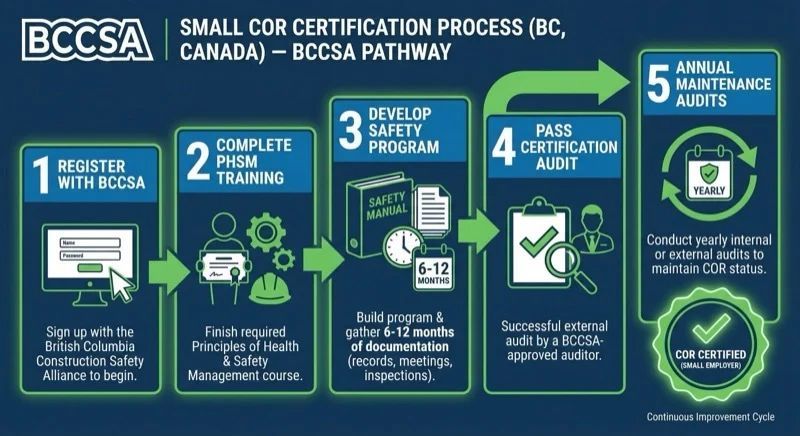
Continuous education is a key component in the safety process we use at Double Black Construction to maintain and improve our levels of jobsite care. During the summer of 2026, we continued to advance our progress with the BC Construction Safety Alliance’s (BCCSA) Certificate of Recognition (COR) safety program. In partnership with WorkSafeBC, we started the steps necessary to achieve our formal COR audit and get certified.
To get certified, a company must build a complete written health and safety program (14 elements), use it every day on the job and then pass an audit that checks the paperwork, looks at the work and interviews the workers. It's not a one-time certificate. Certified companies are audited every year to maintain their approved status and use the COR logo.
Read our other articles on jobsite safety and the processes we use to ensure best worksite practices:
- Construction Leadership Plays a Key Role in Jobsite Safety
- Pre-Engineered Steel Construction Enhances Safety and Efficiency
- Jobsite Safety Is No Joke!
Let’s take a moment to look at the COR program, learn why are enrolled in it and what it means for our clients and the safety of our skilled trade workers. I’m sure you will find what I learned in the COR Internal Auditor Course as fascinating and informative as I did.
Why We Are Doing It: COR is an Important Part of a Comprehensive Safety Program
More and more, business owners, general contractors (GCs) and public-sector clients are asking to work with COR certified firms when they pick subcontractors. We want to be ready for those jobs.
Double Black Constructions works on big sites: airports, mines, ports, First Nations communities and the North. Those locations and clients expect a proven safety system, not just good intentions. Safety is essential because steel erection is high-risk work using crane lifts, working at heights and heavy materials. We've always worked safely, but COR allows us to prove it on paper and improve our safety processes every year.
"In steel erection, safety can't just be a promise. COR makes us write it down, do it the same way every time and prove it to an outside auditor. That's good for our crews and good for our clients."
~ John Lohan, Double Black Construction
Having safety measures is place is good, but if they all aren’t written down and available to every team member, they can be forgotten or drift in the minds of the team. Recording everything in advance and being able to anticipate any potential incident and documenting any that do occur is an important component of a modern safety program.
COR represents our commitment to protect our crews, so everybody goes home at the end of the day.
What Certification Means for Our Clients
Safety offers many benefits for clients as well, including lower insurance costs for projects. We help assure fewer surprises on site by planning to deal with potential hazards before we arrive and not on the first day work starts. Accident prevention is the biggest measure companies can take, and it can be incorporated into planning at the very earliest stages of design and project management.
Our safety processes are also essential to making things easier for GCs. Our safety paperwork (including hazard assessments, toolbox talks, inspections, training records, etc.) is ready to hand over immediately at the start of the job. No need to wait! Safer sites mean fewer delays, fewer incidents and less risk for the owner and the GC. It shows we take the job seriously, from the office to the top of the frame.
John’s Experience in the COR Program
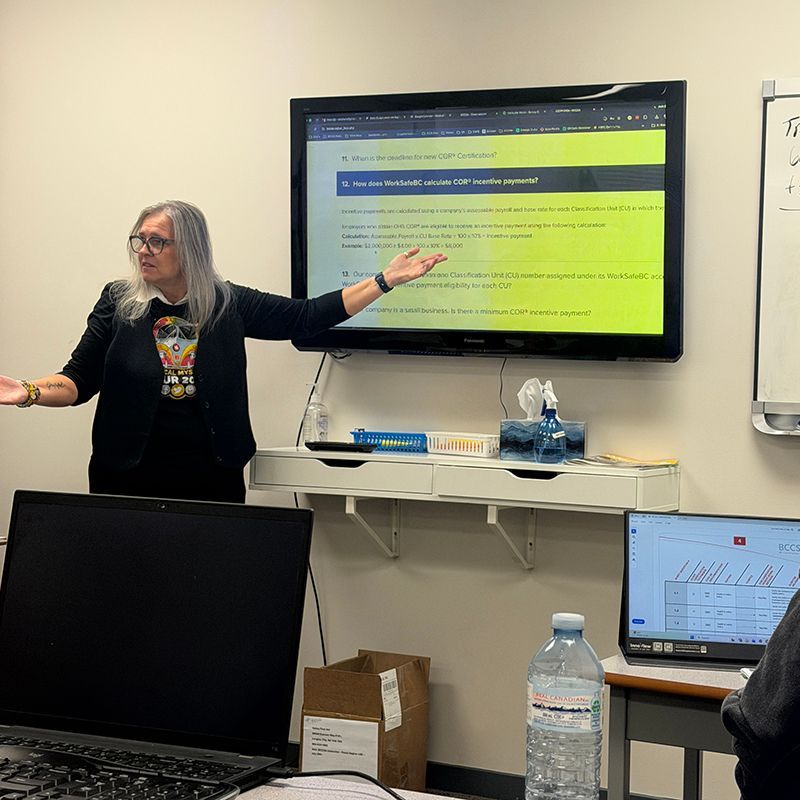
I took BCCSA's two-day COR Internal Auditor course in September 2026. It teaches you how to audit a company's safety program the way BCCSA does: check the documents, watch the work and interview the people. Since then, I've been working one-on-one with our BCCSA Regional Safety Advisor on Zoom calls, going through the program element by element.
Using the lessons, our team has created our own customized Occupational Health & Safety (OHS) Manual from scratch, made specifically for pre-engineered metal building (PEMB) erection, and not a generic template. I'm now doing my student audit on our entire Double Black Construction organization and all the procedures we use throughout our projects. That means interviewing our own team and checking our own records the way an outside auditor would.
The two biggest lessons I’ve learned:
- Safety has to be written down, done the same way every time, and the workers must be part of it. If the process isn't written down, an auditor won’t know it happened at all.
- Hazard assessment isn't only for the job site: we now do it for shop and even relating to office work.
New Safety Measures Implemented at the Worksite
The In addition to our existing safe work practices, here’s a list of the new actions based on COR we’re undertaking at our jobsites to ensure current and best practices are used all the time.
- Written a new company OHS manual covering all 14 COR elements.
- Created 15 written safe job procedures for our critical tasks.
- Examples: crane lifts and rigging, frame erection and bracing, boom and scissor lifts, fall protection and rescue, roof and wall panels, forklift and telehandler, unloading material and trailer towing.
- We now conduct a written hazard assessment before every job in addition to doing a field-level hazard assessment by the crew every day.
- More communication: daily toolbox talks with the crew, monthly site safety meetings and quarterly management safety meetings.
- Formal site inspections every two weeks.
- Every new worker gets an orientation before starting.
- We check tickets and training before they go to work (e.g., fall protection, boom/scissor lift, forklift, rigging, first aid, WHMIS).
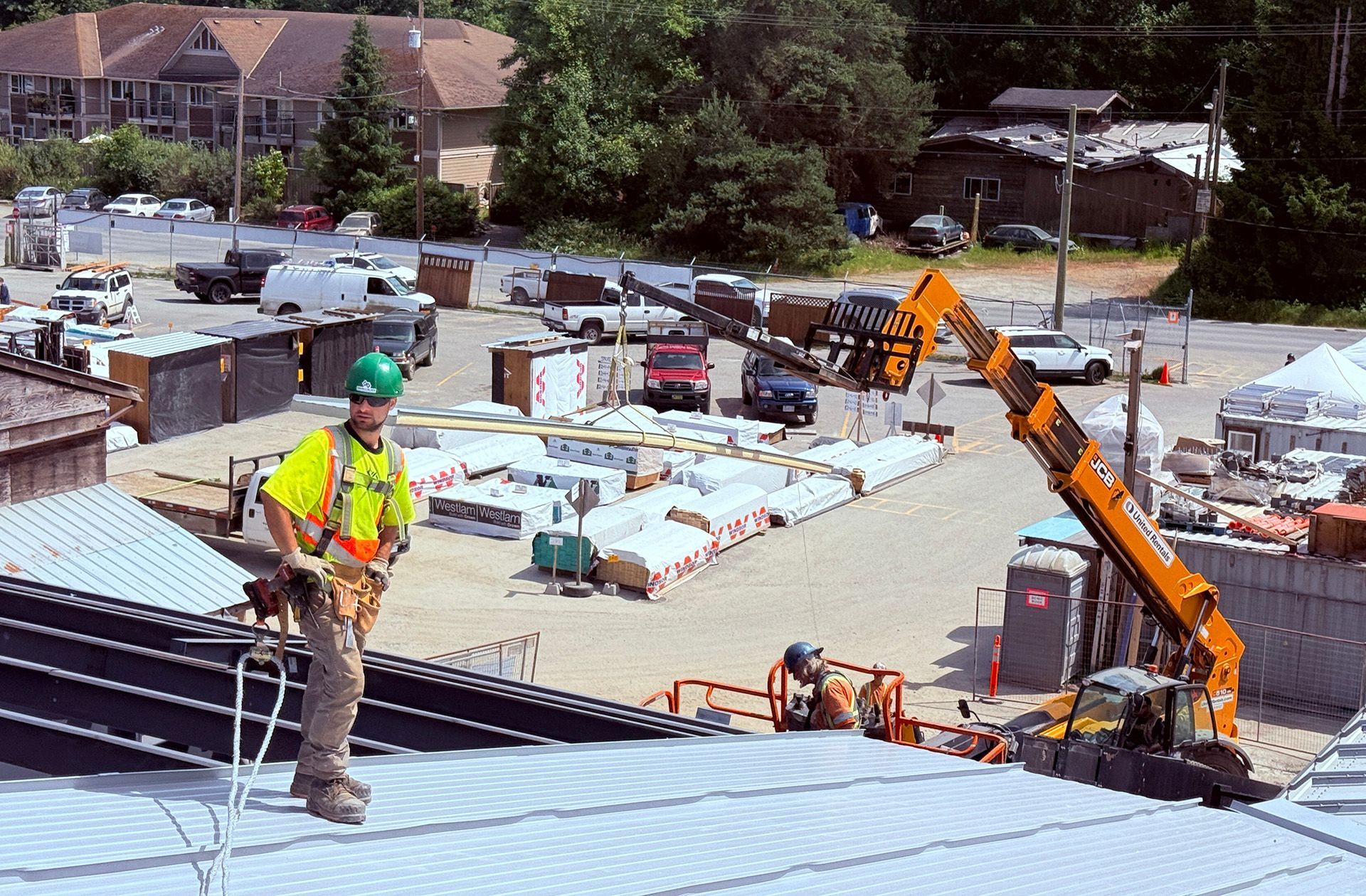
- All work at height is done from machines (e.g., boom lifts, scissor lifts). We don't use ladders or scaffolds for our work.
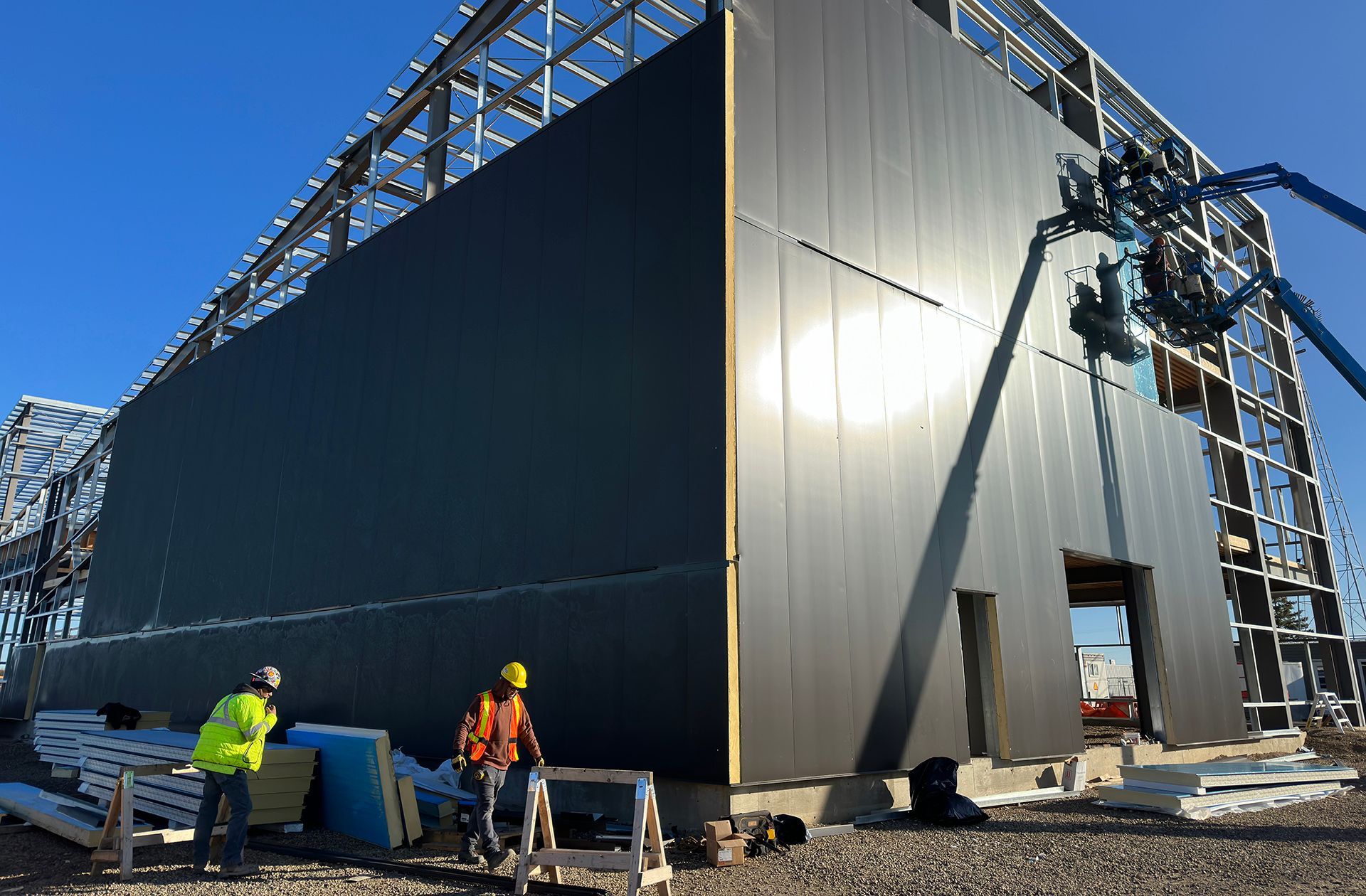
- We only do bolted connections; no field welding. That removes big fire and burn hazards from each site.
- Pre-use inspections on equipment. Broken tools get tagged "Do Not Use" and taken out of service.
- Every incident AND ‘near miss’ gets reported and investigated
- We fix the cause, not just the symptom.
What’s next on our COR Certification journey?
I’ve enjoyed the program so far and it’s been very instructive on what we can do to make our work and jobsites even safer for everyone. The work, of course, never ends.
The next steps are to finish my student audit in the fall of 2026 and begin running our adopted program on new projects starting in January 2027. We’ll finished our formal COR audit to get certified. Once we pass, you’ll start to see the COR logo across our website and throughout all our proposal and administration documents. It’s a huge accomplishment and something we’re proud to be undertaking on behalf of all our stakeholders.
When you want to work with a building erection partner that takes safety as seriously as you, contact our disciplined and trained team by calling (833) 322-2722 or emailing us at info@DoubleBlackConstruction.com. Feel free to also request a quote online.
As a dedicated labour-only pre-engineered metal building systems installer, we are focused on construction for industrial clients and engineering teams who want a trusted and experienced erector partner. Double Black Construction delivers more than structures. We deliver predictable performance.
You might also like