What’s With All the Colours? A Quick Guide to Construction Helmets
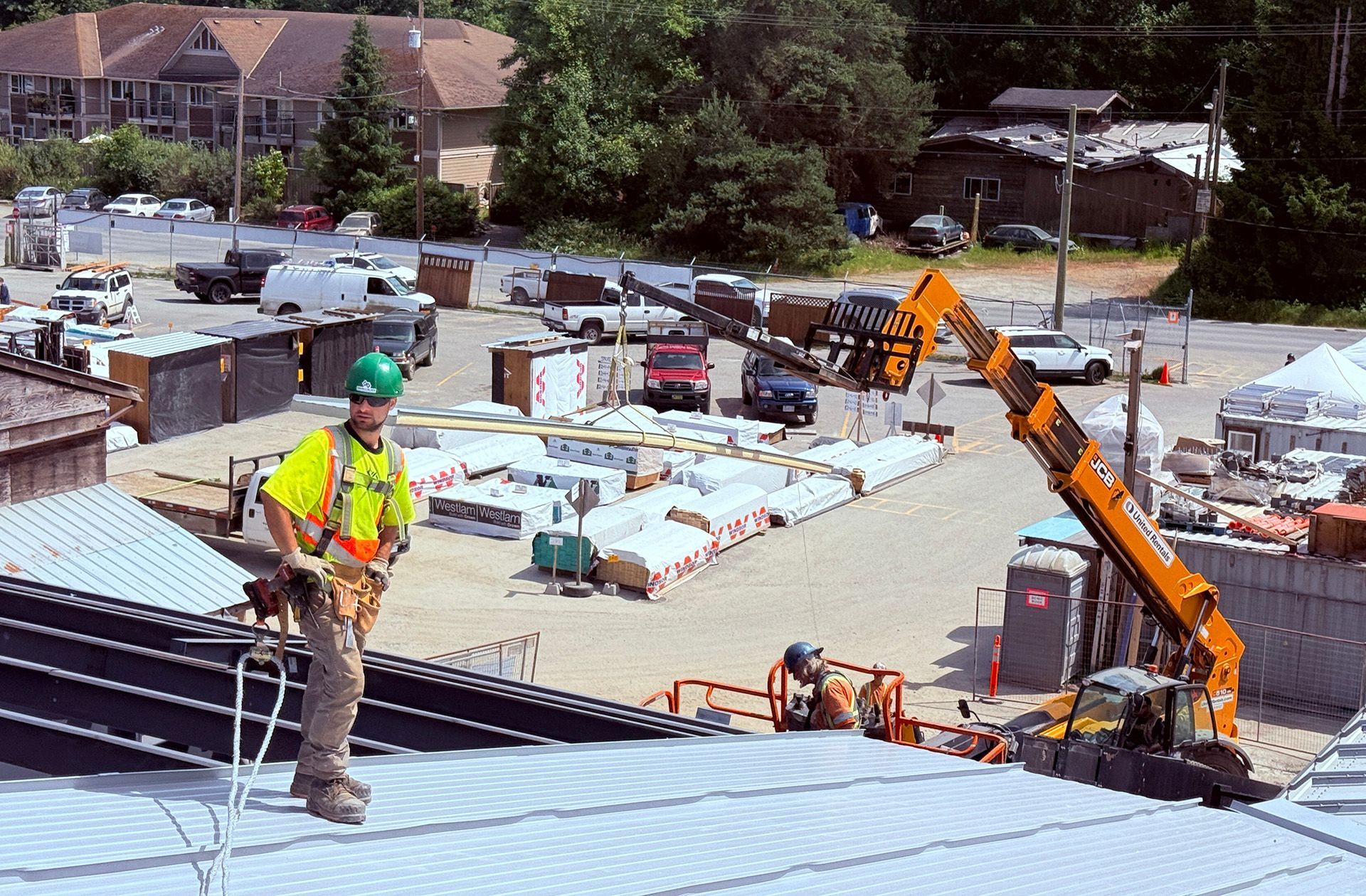
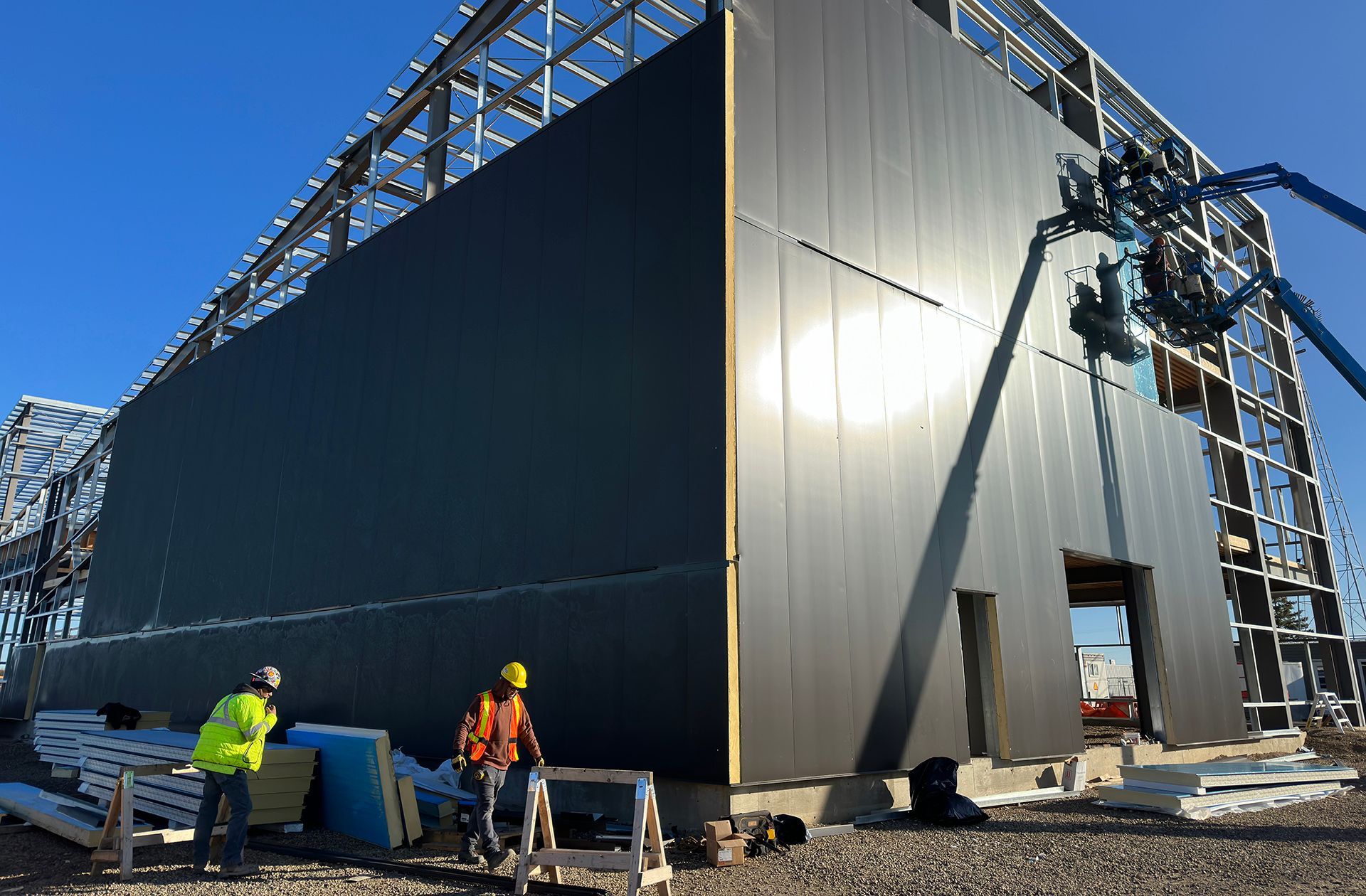
Ever walked by a construction site and noticed all the activity, with workers moving around almost like bees in a hive? There’s heavy machinery, equipment moving in every direction, safety gear and plenty of dust and noise.
You might have also noticed the different coloured construction helmets and wondered whether the colours actually mean anything.
Here’s the thing: workers generally don’t get to pick the colour of their helmets based on personal preference or because yellow happens to work particularly well with their fashion choice.
The helmet colours have specific meanings, helping people quickly identify who is responsible for different functions and, more importantly, who to look for when tradespeople and team members need information, assistance or help in an emergency.
Here’s a quick and fun explainer about construction helmets.
First Things First: Protect Your Head
Before getting into colours, it’s important to remember the primary purpose of a construction helmet is to protect the person wearing it.
Construction sites present numerous overhead and surrounding hazards. Tools can fall. Materials can shift. Workers can bump into beams and equipment. Machinery is constantly moving. Depending on the job, electrical hazards may also be present.
Properly rated head protection is designed to resist penetration, deflect and absorb impacts and provide protection appropriate to the hazards of the work environment. Certain helmets can also provide electrical insulation.
Protective helmets are generally identified as Type I (intended primarily to protect against impacts to the top of the head) or Type II (designed to provide protection against both top and lateral impacts). Helmets may also carry classifications relating to electrical protection. In other words, colour may tell you who somebody is, but the helmet itself is there to make sure that person gets home safely.
Why Colour Matters
There is no universal North American regulation requiring every construction project to use exactly the same helmet colour for each occupation. Individual companies and projects can establish their own systems. However, some colour conventions have become common because they offer a surprisingly simple advantage: instant identification.
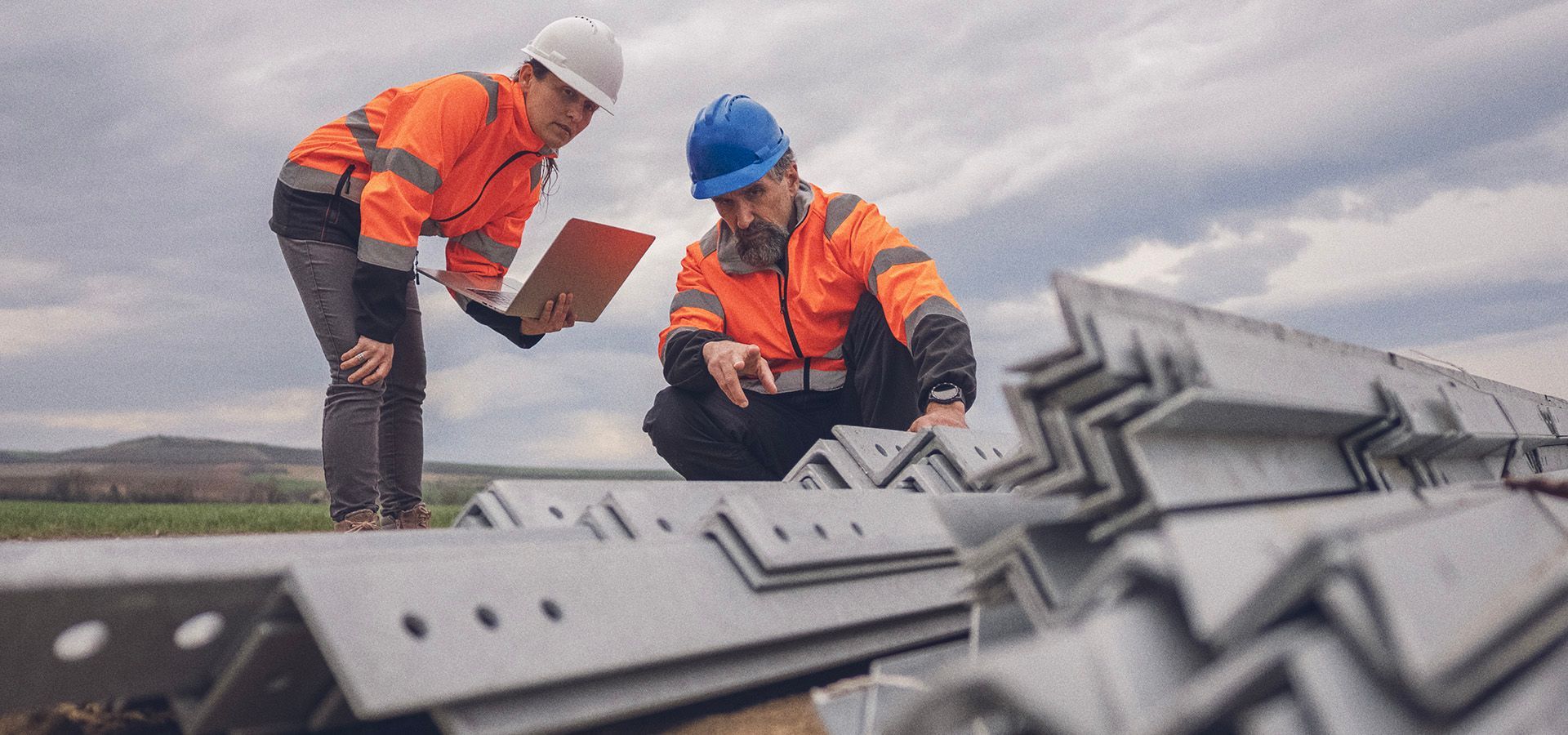
Imagine an electrical emergency. Instead of running around shouting, “Does anybody know where the electrician is?” workers may immediately know to look for a blue helmet. Need the site supervisor? Find the white helmet. Emergency response? Red may point you toward someone with the appropriate training.
Colour coding can help supervisors identify where different crews are working, keep unauthorized people away from hazardous areas, recognize visitors who may require assistance and find key personnel quickly. On a busy construction project, saving even a few seconds matters.
What Do the Colours Mean?
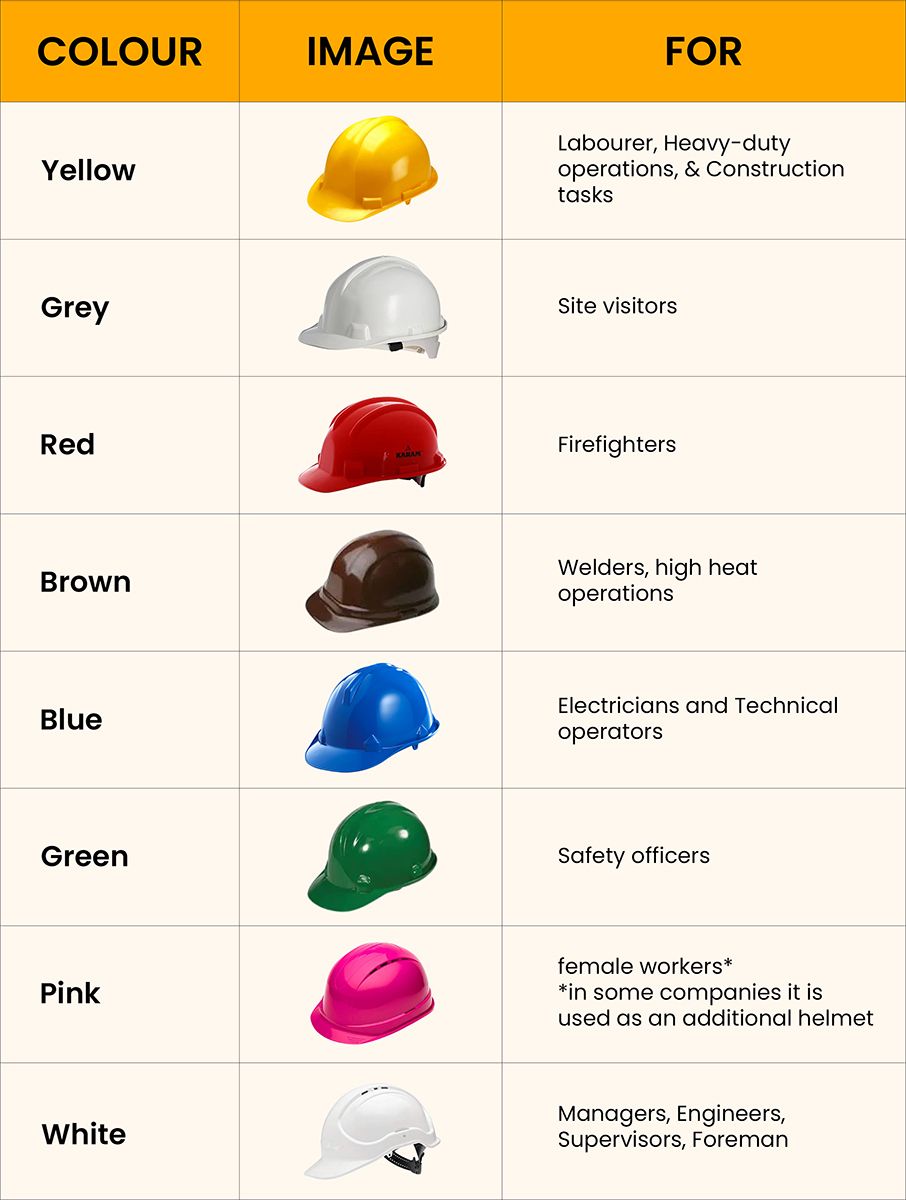
Although every site can establish its own rules, some commonly used helmet colour conventions exist.
- WHITE: Management and Supervision. White helmets are commonly associated with site managers, supervisors, forepersons, engineers and architects. If you have an important question, the white helmet may be a good place to start. If you have an expensive question, perhaps approach cautiously.
- YELLOW: General Construction Workers. Yellow represents the workhorse of the construction-site colour spectrum. It is commonly worn by general labourers, equipment operators and workers involved in excavation and other construction activities. That explains why yellow helmets are often among the most numerous on a busy project.
- BLUE: Skilled and Technical Trades. Electricians, carpenters and other technical workers are frequently identified by blue helmets. Some projects may also use blue for temporary employees or people performing specialized advisory roles.
- BROWN: Welders and High-Heat Work. Brown helmets are often associated with welders and workers operating around high-temperature applications. Their protective equipment may be manufactured from materials suited to environments involving sparks, heat and hot debris.
- GREEN: Safety Personnel or Trainees. Green commonly identifies safety inspectors or other safety personnel. Some organizations also use green for new hires, trainees or probationary employees. It is essentially a visual reminder to give that person some additional consideration while they become familiar with the site.
- Orange: High Visibility. You will frequently find orange helmets around road construction, traffic control, cranes and heavy equipment. The objective is straightforward: be seen. When vehicles and large machines are moving nearby, visibility is a safety feature, not a fashion statement.
- RED: Emergency Personnel. Red is commonly associated with fire marshals, designated firefighters and workers with emergency responsibilities. It is deliberately difficult to miss – which is exactly the point when something goes wrong.
- GREY: Visitors. Grey helmets are often issued to site visitors. The colour can alert experienced workers that the wearer may not know the project's hazards, procedures or restricted areas. Translation: if you see a grey helmet wandering somewhere it shouldn't be, lend a hand.
- BLACK: Management or Specialized Roles. Black helmets are less standardized but may be used for supervisors, forepersons or other management positions. They can also be found in specialized industries and electrical applications. As with every colour, the individual site's rules take precedence.
- PINK:
The One You Don’t Forget.
Pink has sometimes been used as a highly visible helmet colour. It is sometimes used to identify women construction workers, or in the past, as a temporary helmet issued to somebody who forgot theirs at home. Forget your hard hat once and you may spend the day making an colourful fashion statement.
More Than Just Colours
Helmet colour coding isn't merely about knowing who's who. It can contribute to a more organized and efficient construction site.
Workers can locate supervisors faster. Site managers can recognize different trades at a glance. Visitors and inexperienced personnel are easier to identify and protect. Emergency personnel can be located more quickly. High-visibility colours can also make workers easier for equipment operators and motorists to see.
One important caution: don't turn a helmet into a DIY painting project just to achieve the desired colour. Paints, solvents, adhesives and even some stickers can contain chemicals that may adversely affect helmet materials. Manufacturers' instructions should always be followed when applying anything to protective headgear. If a particular colour is required, purchasing the helmet in that factory-produced colour is the safer approach.
Most importantly, workers should never assume someone's occupation or authority based solely on helmet colour. Always learn and follow the colour-coding system established for the specific project.
So, the next time you pass a construction site and see that hive of activity, take another look at the helmets. That collection of white, yellow, blue, orange, green and red isn't necessarily random. It can be part of a simple visual communication system designed to help hundreds of people understand who's doing what, find the right person quickly and keep a complicated workplace running safely.
One Last Note from Another Perspective
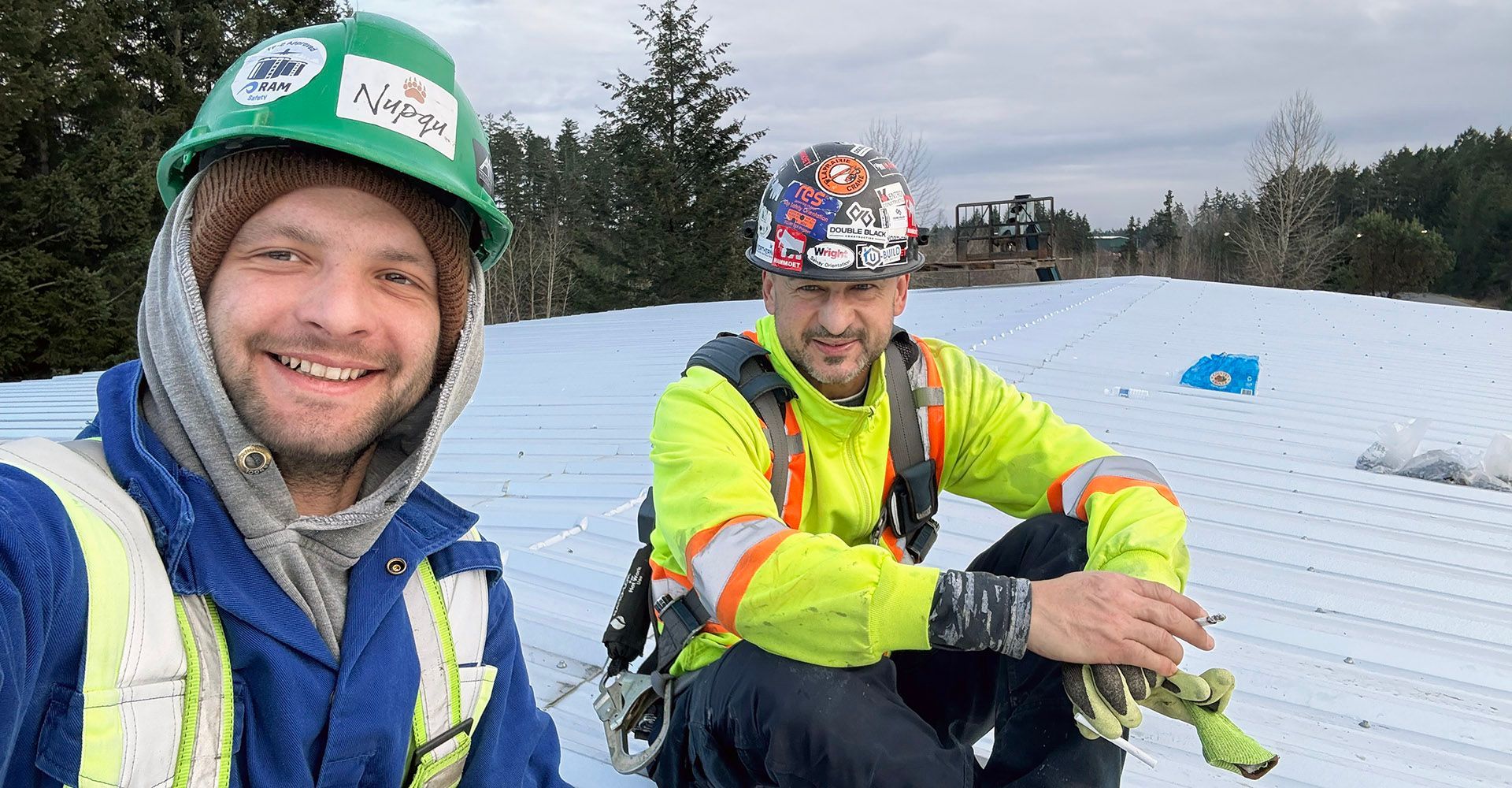
John Lohan has been working in the construction of pre-engineered metal building systems for nearly 30 years and has spent the majority of his adult life on construction sites. He knows them better than most and, when asked about his perspective on helmet colours, did not hold back in his opinion.
Without editing, here’s John’s view:
- Green helmets are for beginners.
- White helmets are for people who know what is needed to be done by others – the boss!
- Blue helmet – for those people who spend 45 minutes looking for tools
- Yellow helmets are worn by people who get the job done on schedule!
- Orange helmets can stop a train with a finger
- Black helmets are for people who see all the mistakes and make half of them themselves
“The colour of the helmet doesn’t always determine the job,” John says with a devilish glint in his eye and a sly smile, “it determines who gets blame for any mistakes!”
About the author:
A. Paul Mitchell is Head of Research and Business Innovation for Double Black Construction and is an award-winning professional with over 30-years experience in marketing and business strategy. His previous cross-industry experience has helped develop an extensive breadth of skills, including writing, graphic and web design, media relations and operations. Paul holds Executive Master of Business Administration (MBA) and Bachelor of Arts degrees as well as professional certificates in Leadership and Business Analysis from Western University. He also completed Centennial College’s post-graduate marketing and business management program. He lives in London, Ontario with his family. Connect with him on LinkedIn.
You might also like